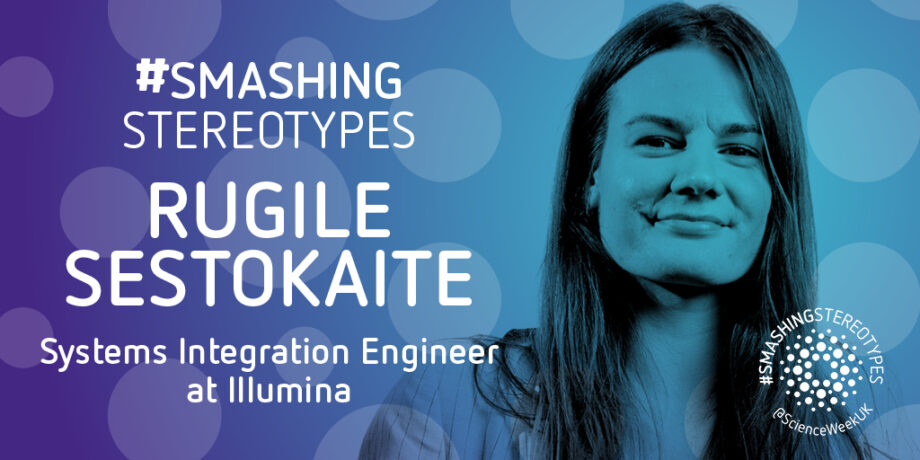
Rugile Sestokaite
System Integration Engineer at Illumina
Building inclusive science through lived experience
Rugile Sestokaite is a System Integration Engineer at Illumina, where she ensures hardware and software systems work seamlessly together to diagnose diseases and improve lives. Originally from Lithuania, she moved to the UK for greater accessibility and opportunities in STEM. She began her career as a research assistant, completed a bachelor’s degree in biochemistry, and later studied data analytics part-time while working, gradually transitioning into engineering.
Building systems to improve lives
I’m a system integration engineer at Illumina, where I make sure hardware and software work together effectively. My role is a mixture of lab work, analysis, office work, and meetings. There’s not much physical labour like lifting instruments or repetitive pipetting. Some weeks are lab-based, others are office-based – it depends on the project.
When you see that the projects you’ve worked on help diagnose disease or save lives, it’s incredibly motivating. I bring my background in biochemistry, genetics, and data analytics into my work, and seeing that have real-world impact is amazing.
The reality of having an invisible disability
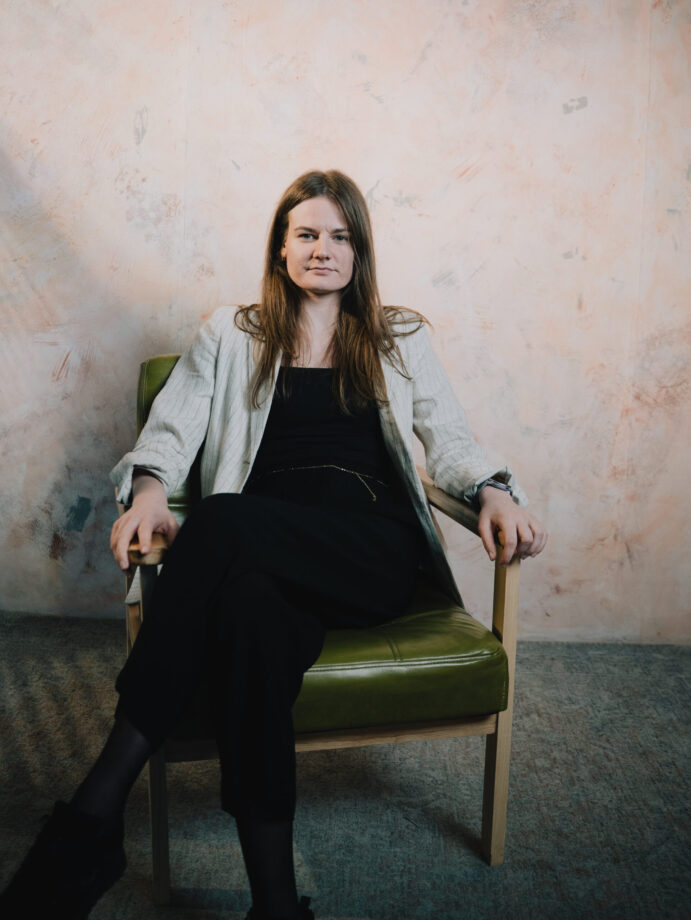
I have spinal muscular atrophy (SMA), a genetic condition that affects my muscles. My legs are the weakest, so I struggle with stairs and can’t run. Standing for long periods, especially in the lab, causes fatigue. If I trip, I can’t get up by myself.
Often, people don’t realise I’m disabled because I can walk. Many people still assume that if you’re disabled, you must use a wheelchair. That’s why I think it’s important to talk about invisible disabilities. Not all disabilities are visible, and awareness around this in the UK has really improved.
What real workplace support looks like
My workplace, Illumina, have been incredibly supportive. After I disclosed my disability, my team and director immediately offered adjustments, like an adapted chair and lab access via lifts.
They’re flexible with working from home when I’m unwell and accommodate medical appointments. My manager regularly checks whether tasks are physically manageable. My colleagues are always ready to help if needed.
I’m also clear about what support I need, and they’re very willing to provide it.
Finding my path from Lithuania to the UK
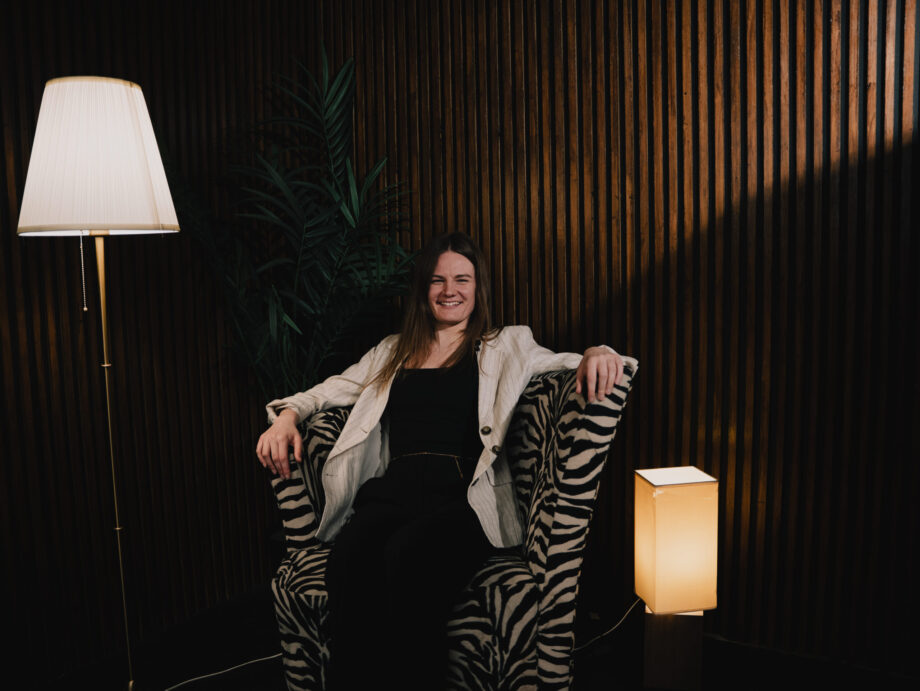
I’m originally from Lithuania and I moved to the United Kingdom about ten years ago. I started my career as a research assistant and completed a bachelor’s degree in biochemistry. While working full-time, I decided to study data analytics part-time to learn more about statistics and coding. During my master’s, I gradually moved towards the engineering side, which led me to my current role.
Looking after myself
Managing my energy levels is the biggest one. My mind wants to do more than my body can handle. I find it hard to take breaks or ask for help, even though I know I should.
I’m still learning to listen to my body, rest when needed, and communicate my limits. That’s an ongoing challenge for me.
The places and people who sparked my curiosity into STEM
My inspiration for going into science comes from a few different places. One was my chemistry teacher at school. When I started secondary school, she was incredibly passionate, and that really stayed with me. I was also a very curious child, always asking questions. My mum used to joke that there were too many questions she couldn’t answer.
My parents were also important. When I doubted myself because others said I wouldn’t manage, my mum always told me to try anyway. She said, “If it doesn’t work, you can change direction, but don’t let other people’s opinions stop you.”
My father doesn’t have a STEM degree, no one in my family does, but when I told him I was curious about science, he gave me a very old chemistry book he had. It sparked my interest, even though it was difficult to understand at first – no pictures, just black and white text. I used the internet and YouTube to help, and over time I knew I wanted to go into STEM.
I also loved futuristic films as a child, especially ones involving genetics and technology. Ideas like genetic engineering seemed impossible back then, but fascinating.
Proving women belong in science
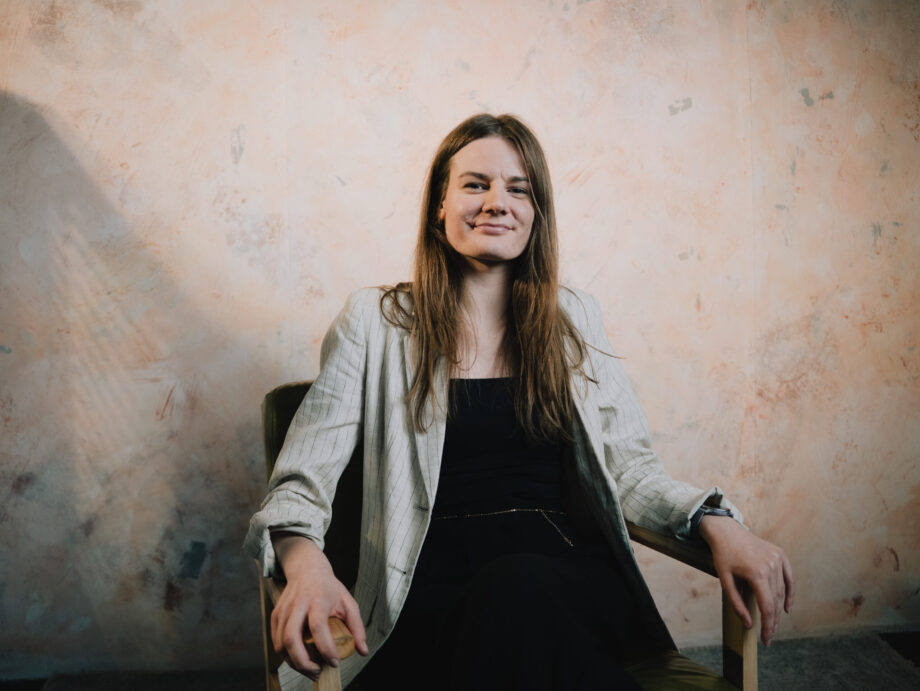
Another big moment was learning about Marie Curie. I remember being angry when I found out she was rejected from university in Warsaw because she was a woman. That made me want to prove that women belong in science. Her perseverance and achievements inspired me deeply.
In Lithuania, it was rare for girls to go into engineering or IT. Girls were encouraged towards biology or medicine instead. So for me, it was a mix of films, reading about women in science, and school experiments. My chemistry teacher tried hard to make lessons practical and engaging, even with limited resources. Seeing colours change, reactions foam – I loved that.
Choosing the UK for opportunity and accessibility
I decided to come to the UK because it felt more inclusive, especially for disabled people, and also because of the languages I studied at school. I wanted to study abroad, and the UK felt like the right place.
In many ways the UK is much more inclusive, especially for accessibility. I struggled a lot at school in Lithuania. Some classes were upstairs with no lift, so I had to climb the stairs. Later, I had a great school director, and sometimes teachers would come downstairs, or classmates would help me, but it was still very difficult.
There were also fewer scientific job opportunities compared to the UK, and a lot of stereotypes. When I said I wanted to go into science, people would say things like, “It will be difficult – you’re a woman, you’re disabled. How will you carry heavy containers of chemicals?”
So, accessibility and attitudes were big factors. In the UK, there’s more promotion of inclusion and representation. There’s more emphasis on showing that women and disabled people can genuinely work in science, not just dream about it.
Inspiring more young people into STEM through stories
Sharing real stories is key, especially through social media. Showing struggles as well as successes helps people relate.
Teachers and lecturers are also crucial. An inspiring, supportive teacher can make all the difference, especially for students who learn differently. Schools and universities need to do more to accommodate different learning needs, because many people leave STEM not due to lack of interest, but lack of support.
Being open about disability in science
Representation matters, especially for children. Books, media, and education need to show different types of people in STEM roles.
I try to be open about my experience. I’ve often wondered whether to disclose my disability in interviews, worrying it might count against me. But disabled people can bring huge value and excluding them is a loss.
This profile was updated on 26 February 2026.
Click here for more scientists who are Smashing Stereotypes.