Ros Jackson
Director of Development and research at Illumina
Unlocking the power of the genome to push forward health research
Ros was passionate about science and figuring out how things work as a child. She studied science at university and went into research, before taking a break of eight years to be a full-time parent. When offered the chance to return by doing a PhD in her thirties she wasn’t sure if she had the time, but decided to go for it, working in the lab during school-hours and analysing results and planning in the evenings. Ros has now worked at Illumina for 16 years, directing a team driving advances in biotechnology and enabling genomics.
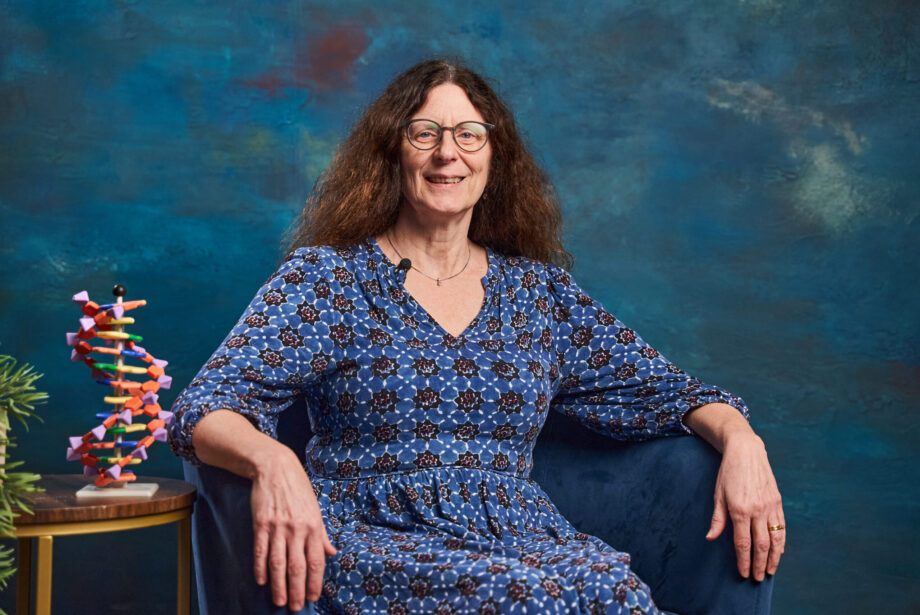
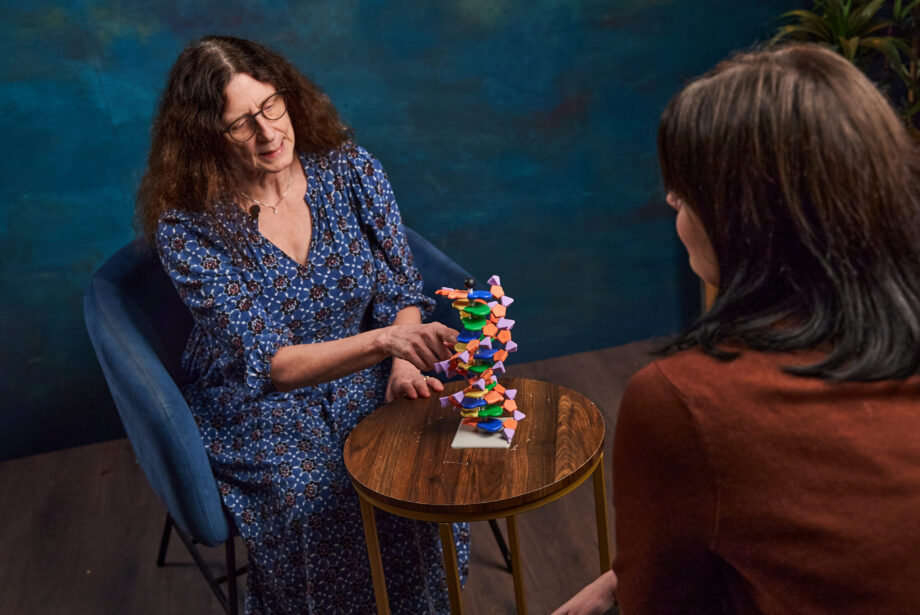
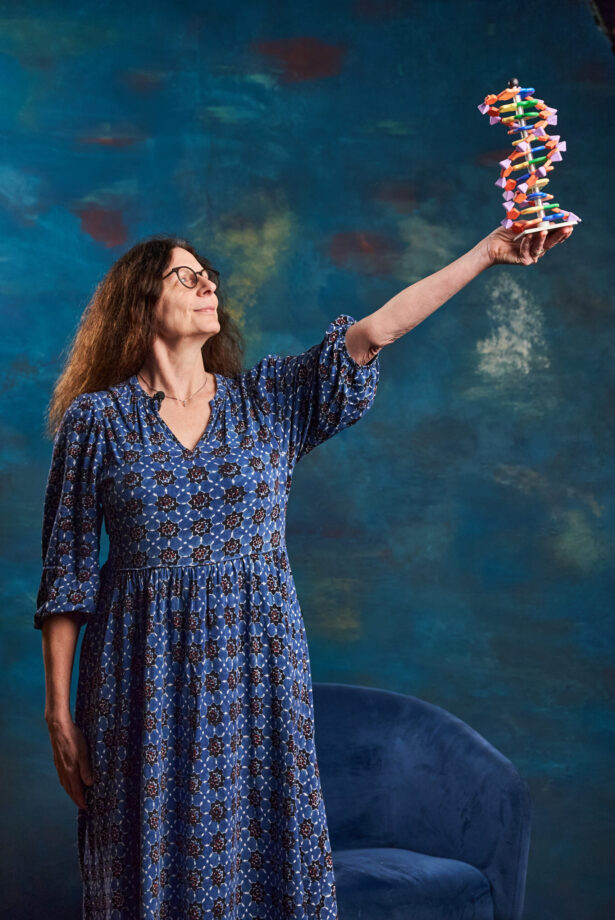
I work at Illumina, a company that makes DNA sequencing instruments. The instruments work by making a copy of DNA using labelled bases to work out the order of addition, and hence the sequence. The ‘bases’ are like letter codes running along the length of the DNA molecule (A, C, G, or T). By labelling these bases with a different fluorescent dye, we can read off the sequence of bases as different colours when illuminated with a laser.
As Director of Research and Development, I work on the liquid reagents that are used to copy the DNA. In effect, I work on the biochemistry and chemistry that has to happen to enable DNA sequencing. The focus is how to make the sequencing more accurate, faster, and cheaper.
I was a pretty normal kid, went to my local comprehensive and enjoyed science. I did well in my A-Levels and was fortunate to get a place at the University of Oxford to study biochemistry. After that, my first job was to work for a pharmaceuticals company as a research assistant.
For two and a half years I worked on protein purification, setting up experiments to screen new drugs for a particular disease. I enjoyed it, but when I left work to have my first child, I actively decided to take a career break – I stayed home for what ended up being eight years and had three children in that time.
Find something ‘just for you’
Being a full-time mum was great, I enjoyed it, and found plenty of things to keep me busy. I set up a toddler group with our local church and took a role as treasurer for a group in our village. I was a member of a local orchestra – that was something just for me, because life could revolve around the children. But I got to the stage when I wanted to do something more. I still remember getting out one of my old textbooks and looking through it, thinking it would be nice to do some science again, so I decided to look for something.
I was fortunate enough to find a part-time job at the University of York, which fitted in with the children, and I worked there for a few months.
Staying motivated and taking new opportunities
My boss had a PhD position come up and offered it to me, encouraging me to apply. My initial reaction was ‘no way!’ How can I do a PhD with three young children, inside school hours? She was very persuasive, and when I sat down and thought about it, this was an opportunity I couldn’t afford to miss.
It was scary, but exciting at the same time. I enrolled on the PhD, doing most of my lab work during the school day, and I would work on analysis and write-ups when the children went to bed. My manager was really accommodating, and I was very fortunate that I could be flexible with my hours.
When I finished the PhD, I still wanted to work in a similar area, so I took a job with the same research group, on a related topic. But I wasn’t motivated and I wasn’t enjoying it, so I stayed for a while but realised I needed to do something I was interested in.
Fortunately, there was another group in the department that worked on a topic I was much more interested in – enzymes. I moved to that group and was much more fulfilled. It was a topic I was interested in and so I did it better. I did that for a few years with evolving projects.
Throughout this period, with the kids still young, I worked part-time. I was starting to look for something else and one day, while in the hairdressers with one of my kids, bumped into someone I used to work with. She had founded a small start-up company and offered me a job which I decided to go for.
The company unfortunately didn’t last; they went into liquidation when I had only been there for 10 months. But it was an interesting journey. I had responsibility for employees for the first time and being such a small company I had to make a lot of decisions. So, it was a great learning opportunity. From there, I went back to the University of York temporarily as my old boss was kind enough to offer me some work while I looked for something permanent. After a year, I found a role at Illumina.
My husband lost his job three weeks before I was made redundant from the start-up, so we were both out of work for a while. He moved into a new position that was in Cambridge and this opened up a lot more opportunity for me to find work in STEM fields.
Taking skills from life to the lab
I’ve now been at Illumina for 16 years. I started off as a ‘lab scientist’ doing mainly experimental work, day to day. I rarely do experiments now, but lead a team who do and guide them in the experiment planning and priorities.
Even before I started my PhD, there was rarely a time in the day when I had more than a two-hour window – there were always places to be with the kids, and all at different times. Dropping one off somewhere, then another, picking one up at 12, another at 3, after school activities, dinner.
This was good preparation for my PhD studies when the whole day had to be well organised and structured. I had to plan everything carefully and do what I could in advance to fit more into the day if I was constrained by school hours, for example. I developed these skills being a busy mum and they were extremely helpful for the workplace!
I often ate my lunch on the way to the school pick up but I made these choices because I wanted to be there to collect my children at the school gate. I worked hard to prepare ahead and pack a lot into my shorter working days to get everything done.
Fascinated by how life worked
As a child, what first got me interested in science were colour changes: one of the first thing you see in chemistry. And I remember my older brothers showing me how to make a copper coin be coated with silver through electrolysis – that was fascinating. In our biology classes at school we did dissections: it was impactful, you got to see how life worked.
As a child I also loved codes and decoding puzzles. So, when I learned about the genetic code, that was mind-blowing. It captivated me. So did learning about haemoglobin, the protein in our blood, and how just one amino acid change can cause sickle cell anaemia and that change results from one mistake in the DNA. That’s always stuck with me. A tiny change at the molecular level can have a very significant impact on a living organism.
My dad was quite an influence on me. He was an engineer and my two older brothers followed him into that. I didn’t want to be an engineer, but I was always interested in how things worked. We’d discuss how things worked at home.
Raising awareness of different paths and getting inspired
As a woman who did her PhD in her thirties and went into my current role a little older than you might on a typical path, I hope this shows that you can be involved in science, take a qualification and start a new career when you’re a bit older.
You don’t have to decide when you’re a child whether you’re going to be a scientist or an artist – doing both brings richness and variety. Do both together! It can be difficult to change disciplines, for example, and it’s hard work, but it doesn’t mean it’s not possible. There should be more awareness of possibilities for change – there are so many different ways to get where you want to go.
One thing that is so rewarding with my current role is the mental stimulation that comes with the work and always being able to learn new things every day. Also working with a wide range of different types of people from different backgrounds and disciplines is very rewarding. Being receptive to change and responding to it is so important in your life and career.
My PhD supervisor was a huge inspiration for me. She applied her science to her other interests. She kept a flock of sheep, and when foot and mouth hit she worked to generate a gene bank for sheep breeds to help understand how the different varieties cope with disease and preserve the genetic variation. She was so devoted to her career but to lots of other interests in her life as well, combining science with her interests. An amazing person.
In Cambridge we’re really lucky to have the Cambridge Science Centre nearby. I’ve volunteered there as Illumina encourage us to volunteer in the community. It was brilliant, and I’ve been back recently with my grandson. It’s a brilliant place for children to get hands-on, touch, and see science in action. That’s how you really get kids interested and excited in science.
Illumina have done some outreach work with young people at local schools, and I’ve helped when the students were extracting DNA from strawberries. You can see that they love getting their hands dirty. Science can sound very dry for young people when it’s all about numbers and statistics. Doing experiments is much more fun. That’s how people get interested. You can see their energy go up. It’s lovely – they can see they have extracted DNA themselves from the strawberry and get excited.
I think that’s the same for most people. We’re all young at heart – that’s why doing something that excites you every day is so important.
This profile was updated on 26 February 2026.
Click here for more scientists who are Smashing Stereotypes.