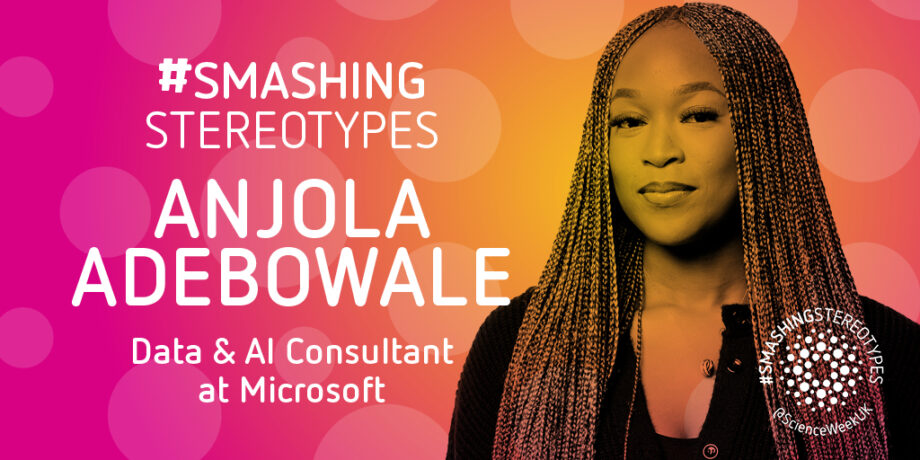
Anjola Adebowale
Data & AI Consultant at Microsoft
Working for equity, inclusion, and taking up space in data and AI
Anjola Adebowale is a Data & AI Consultant at Microsoft and co-leads the Black Employees Network. Growing up in Nigeria, she struggled academically but discovered a passion for IT, studied Computer Science, and completed a placement at Deloitte. She then joined Microsoft, progressing from associate to consultant. She is passionate about representation and mentoring younger people of colour to take space in areas where they’re typically underrepresented, namely tech.
Believe in yourself
I’ve always firmly believed that I can do anything. If you put something in front of me, I want to do it and I will do it. Working in tech, especially, which isn’t very diverse, I want to ensure that no one feels like they can’t be in this space. Technology can change the world, and I want someone like me, from a similar background, to be part of that.
I’m currently a Data and AI consultant within Microsoft’s consulting arm, where we build solutions for customers. I specialise in the design and build of large-scale data platforms and generative AI-applications for clients across multiple industries, with oversight of data engineering workloads.
I really enjoy working across different solutions and building products in the data and AI space. There’s so much opportunity to grow and work on varied projects, from the private to the public sector. From a young age, I’ve been able to see how my work translates into impact, including long-term goals like building digital infrastructure in Africa.
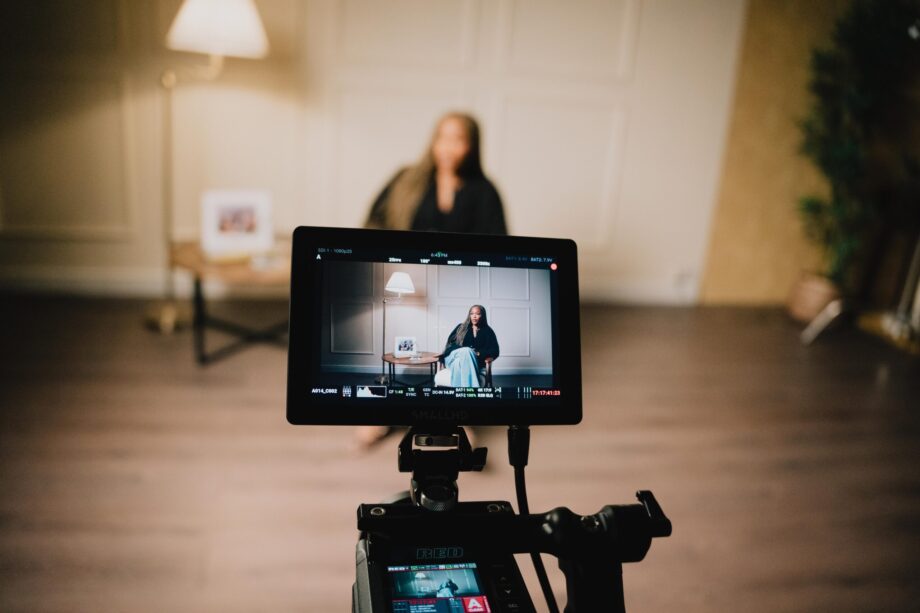
Journey to the tech space
During my A-Levels, I studied computer science, as well as English and psychology. I chose computer science because I really enjoyed studying IT at GCSE and thought, “Oh, this is interesting. Why not take it further?” From there, I decided to pursue it at university.
During my studies, I did a placement year at Deloitte as a cloud engineer. That placement really kickstarted my journey in the tech space. I had a great mentor who helped me ground myself in what I wanted to do.
After my placement, I knew I wanted to go into big tech, and I ended up in a role at Microsoft. I decided not to return to Deloitte and have been working as a consultant ever since, moving from associate into a consultant role.
The biggest challenge is making sure I’m always taking up space. Tech isn’t diverse, so it’s easy to retreat into your shell. I promised myself I wouldn’t do that, I want to stand out, speak up, and contribute confidently. Confidence is key, both in my work and in mentoring.
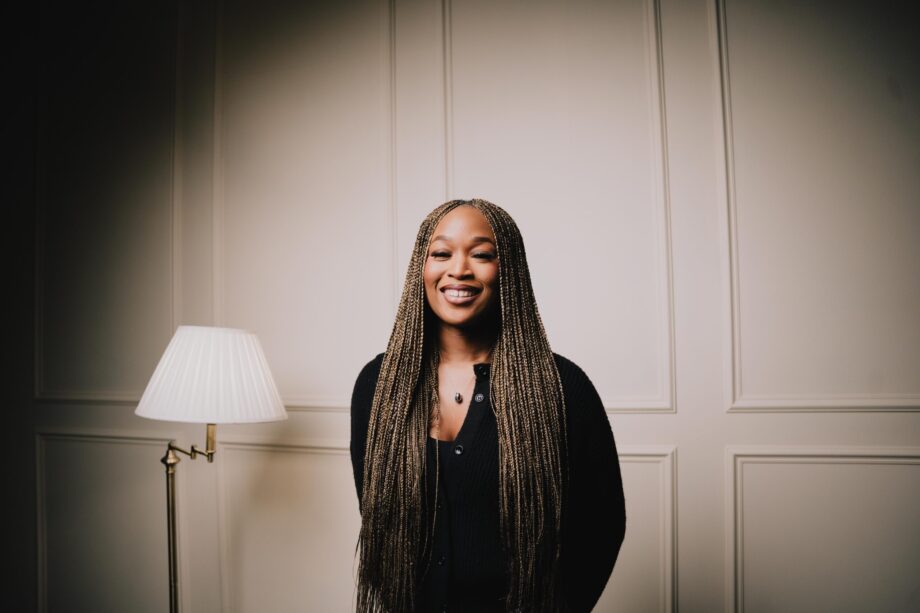
A non-linear journey into STEM
Growing up, I wouldn’t say I was initially into STEM. I didn’t think I could do it because I struggled academically, especially when I was living in Nigeria. The educational system wasn’t really built for my type of brain, so I never imagined myself being good at STEM. I struggled with reading and grasping concepts quickly. So, I would typically leave classes not fully understanding the material. This obviously meant that I took a bit longer than most students to fully understand things, especially in maths!
Things started to change when I went to school in Norwich, England. I remember my maths teacher put me at the front of the class, and that’s when I realised I was good at maths. By my A-levels, I was proud of myself because, despite the struggle, I had fully grasped it. That was the first point where I thought I might want to pursue something in this space because I liked problem-solving and thinking about how small equations could lead to bigger solutions.
That was also when I had to teach myself the entire computer science A-level course. Although it was challenging, I actually enjoyed it. If I enjoyed it this much, I could see myself in the space. I remember worrying about being the only Black person, the only Black woman, and one of just ten students in the class, all white boys. Adjusting to that space, so far from London, was tough. In my first week, I wondered if I should drop computer science.
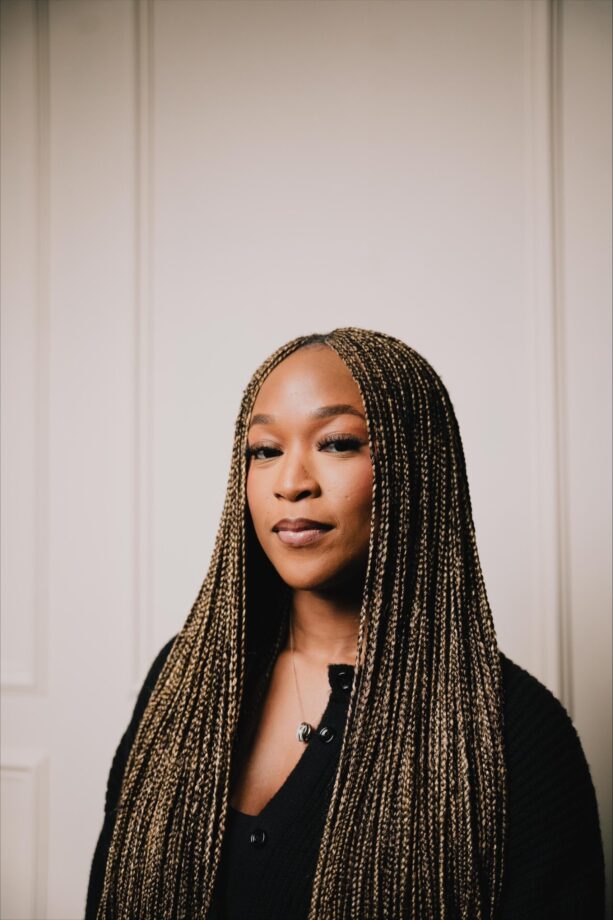
Why you need to take up space
But I decided to stay. I wanted to do it for myself, regardless of what anyone else looked like, and whatever grade I got, I got. That was the most pivotal moment for me, not my earliest memory, but the turning point when I realised my background or appearance wouldn’t stop me.
I just don’t care what everybody else is doing. I want to do this, so I’m going to do it. STEM is for everyone. Science is the baseline of most things, how everything works on the planet. Why wouldn’t we want to be part of that?
STEM isn’t inclusive enough, honestly, it’s not even close. In the UK, there’s progress with the gender balance between men and women, but when you look at ethnic minorities, it’s a different story. For me, it’s even more worrying because you can’t build the future without including everyone. Otherwise, it will cater only to a specific demographic, which is dangerous, especially in AI. STEM has to be inclusive regardless of the general population or percentages; it must cater to everyone.
We don’t have enough women, ethnic minorities, Asian, or Black people in the space, particularly in leadership roles.
Paving the way for others
I run a social enterprise called Tech Suite, focused on helping students from under-represented groups, break into the tech industry. We provide students with support to make them more viable candidates and prepare them for new opportunities. Everyone should be judged on their ability, not their background or skin colour.
I hate the saying “you have to work twice as hard”. You should just work hard and be excellent at your role. It shouldn’t matter where you come from or what your background is, those shouldn’t limit your opportunities. My focus has always been on improving the experience for people, so they don’t feel like they have to burn out to prove themselves.
Driving inclusivity and diversity at Microsoft
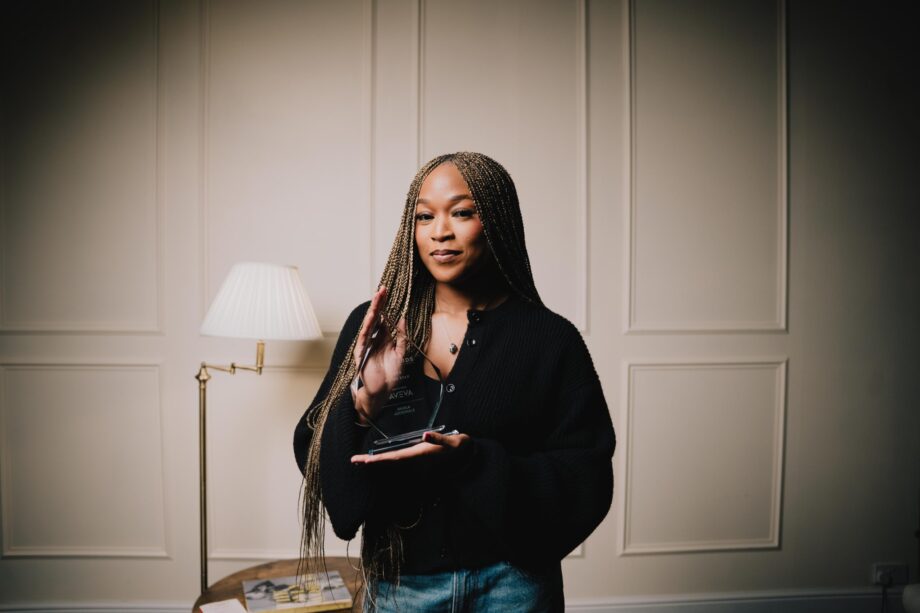
Within Microsoft, I co-lead the Black Employees Network, which aims to improve the experience for Black employees and help them grow within the organisation. Our mission is to foster diversity, inclusion and excellence to empower and enable Black and underrepresented talent, using diversity to drive the next digital revolution.
I’ve also been involved in multiple initiatives: I worked at Black Girls In Tech as the Partnerships Lead, helping companies run programmes, from hackathons to university campaigns. We worked with major Big Tech companies. I also served as Nigeria’s Black Girls in Tech country lead, organising conferences, bootcamps and hackathons to empower and support Nigerian women pursuing careers within the tech space.
How we can move STEM forward
To support more young people to explore careers in STEM, we need to raise awareness and give young people the space to explore, like I did. Students need to develop critical thinking, especially in this era of AI, and learn to investigate and understand STEM for themselves. Representation is also vital. Students from diverse backgrounds should see people in leadership who look like them, so they feel empowered.
Companies can run open days, panels, and CV clinics. Mentorship doesn’t always have to be one-to-one; it can be support through events, guidance, or sharing experiences. Even talking to family members about STEM can have a huge impact. For example, I recently spoke to my little sister about computer science and gave her a book called How to Talk to Robots, which inspired her interest in STEM. It all starts at home as much as in institutions.
This profile was updated on 26 February 2026.
Click here for more scientists who are Smashing Stereotypes.